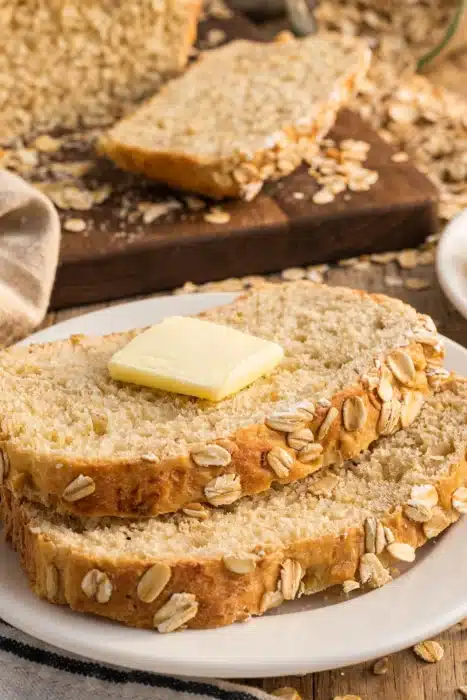
This homemade Oatmeal Bread is soft, hearty, and full of comforting flavor. Made with rolled oats, honey, milk, and simple pantry ingredients, it has a tender texture and a deliciously wholesome taste. It is perfect for breakfast, sandwiches, toast, or serving alongside your favorite meals.
Ingredients
For the Bread:
- 1 cup rolled oats, not quick or instant oats
- 2 tablespoons butter, softened
- 1 cup milk, boiled to a low simmer
- ½ cup warm water
- 2¼ teaspoons active dry yeast
- 2½ cups all-purpose flour
- 2 tablespoons honey
- 1 teaspoon salt
- 1 large egg, room temperature
For the Topping:
- 1 large egg
- 1 tablespoon water
- ¼ cup rolled oats
Instructions
- Grease a 9×5-inch loaf pan and set it aside.
- Place the rolled oats and softened butter in a mixing bowl.
- Pour the warm milk over the oats and butter and stir well.
- Allow the mixture to cool to room temperature for about 1–2 hours.
- In a separate large bowl, combine the warm water and active dry yeast.
- Let the yeast mixture sit for 3–5 minutes, until it begins to foam.
- Add the honey and salt and mix until combined.
- Add the cooled oatmeal mixture and one room-temperature egg.
- Mix with a hand mixer or stand mixer until everything is well incorporated.
- Gradually add the flour while mixing on low speed.
- Continue mixing until a dough forms.
- Knead the dough for several minutes, until it becomes smooth and elastic.
- Place the dough in a lightly greased bowl.
- Cover the bowl and let the dough rise for about 1 hour, or until doubled in size.
- Gently punch down the dough and transfer it to a lightly floured surface.
- Knead the dough briefly, then shape it into a loaf.
- Place the shaped dough into the prepared loaf pan.
- Whisk together the remaining egg and 1 tablespoon of water to make the egg wash.
- Brush the egg wash over the top of the loaf.
- Sprinkle the remaining rolled oats evenly over the surface.
- Loosely cover the loaf with greased plastic wrap.
- Let it rise for 45–60 minutes, or until doubled in size. Avoid letting the dough rise above the top of the pan.
- Preheat the oven to 375°F while the dough is rising.
- Remove the plastic wrap and bake for 30–40 minutes, until golden brown and the loaf sounds hollow when lightly tapped.
- Let the bread cool in the pan for 10 minutes.
- Carefully remove it from the pan and place it on a wire rack.
- Allow the bread to cool completely before slicing and serving.

Serving and Storage Tips
- Serve slices warm with butter, honey, jam, or your favorite spread.
- Toast the bread and top it with peanut butter and banana for a satisfying breakfast.
- Use it to make sandwiches with turkey, chicken, cheese, or fresh vegetables.
- Serve it alongside soups, stews, chili, or roasted meats.
- For French toast, use slightly thicker slices of oatmeal bread.
- Allow the bread to cool completely before storing to prevent excess moisture from developing.
- Store the cooled loaf in an airtight container or bread bag at room temperature for up to 3 days.
- For longer storage, refrigerate the bread in an airtight container for up to about 1 week.
- Freeze the whole loaf or individual slices for up to 3 months.
- If freezing slices, separate them with parchment paper so you can remove only what you need.
- Thaw frozen slices at room temperature or warm them briefly in a toaster.
Variations
1. Maple Oatmeal Bread
Replace the honey with pure maple syrup. The maple adds a warm, slightly caramel-like sweetness that pairs beautifully with the oats.
2. Cinnamon Raisin Oatmeal Bread
Add 1–2 teaspoons of ground cinnamon and about ¾ cup of raisins to the dough. This version is especially delicious toasted with butter for breakfast.
3. Honey Whole Wheat Oatmeal Bread
Replace up to half of the all-purpose flour with whole wheat flour. Keep the honey in the recipe for a slightly sweeter, hearty loaf.
4. Cranberry Oatmeal Bread
Add ½–¾ cup dried cranberries to the dough. The tart cranberries provide a nice contrast to the mildly sweet oatmeal bread.
5. Nutty Oatmeal Bread
Mix ½ cup of chopped walnuts or pecans into the dough before shaping. The nuts add crunch and a rich flavor.
6. Apple Cinnamon Oatmeal Bread
Add finely chopped dried apples and 1 teaspoon of cinnamon. This combination gives the bread a cozy apple-pie-inspired flavor.
7. Seeded Oatmeal Bread
Add sunflower seeds, pumpkin seeds, flaxseeds, or sesame seeds to the dough. You can also sprinkle a mixture of seeds over the egg wash before baking.
8. Brown Sugar Oatmeal Bread
Replace the honey with packed light brown sugar. The brown sugar gives the loaf a deeper sweetness and slightly richer flavor.
9. Molasses Oatmeal Bread
Replace part or all of the honey with molasses. This creates a darker, more robust loaf with a classic old-fashioned flavor.
10. Chocolate Chip Oatmeal Bread
Fold ½ cup of mini chocolate chips into the dough after the flour has been incorporated. This makes the bread especially appealing as a breakfast or snack loaf.
11. Coconut Oatmeal Bread
Add ½ cup unsweetened shredded coconut to the dough. Coconut adds a subtle tropical flavor and works particularly well with honey.
12. Orange Cranberry Oatmeal Bread
Add dried cranberries along with 1 teaspoon of finely grated orange zest. The citrus brightens the flavor and complements the oats beautifully.
13. Savory Herb Oatmeal Bread
For a savory version, reduce the honey slightly and add dried rosemary, thyme, or Italian seasoning. This variation is excellent alongside soups and roasted meats.
14. Cheddar Oatmeal Bread
Add ½–1 cup shredded sharp cheddar cheese to the dough. The cheese creates a flavorful savory loaf that is delicious toasted or served with chili.
15. Garlic Parmesan Oatmeal Bread
Add a small amount of garlic powder and grated Parmesan cheese to the dough. Finish the loaf with a light sprinkle of Parmesan before baking for extra savory flavor.
FAQs
1. Can I use quick oats instead of rolled oats?
Rolled oats are recommended because they provide the best texture. Quick oats may work, but they can absorb liquid differently and produce a softer or less textured loaf.
2. Can I use instant yeast instead of active dry yeast?
Yes. Instant yeast can generally be substituted, although you can mix it directly into the dry ingredients rather than activating it separately.
3. Why does the milk need to cool before adding the yeast mixture?
Very hot milk can interfere with yeast activity. Allowing the oatmeal mixture to cool to room temperature helps protect the yeast when everything is combined.
4. How do I know when the dough has finished rising?
The dough should approximately double in size. The exact time can vary depending on the temperature of your kitchen.
5. Can I make this bread without an egg?
The egg contributes richness and structure. You can experiment with an egg substitute, but the texture may be slightly different.
6. Why is my oatmeal bread dense?
Dense bread can result from insufficient kneading, inactive yeast, too much flour, or allowing the dough to rise in a very cold environment. Measure the flour carefully and make sure your yeast is active.
7. Can I use whole wheat flour?
Yes. Replacing some of the all-purpose flour with whole wheat flour gives the loaf a heartier flavor. Using too much whole wheat flour can make the bread heavier.
8. How should I store homemade oatmeal bread?
Once completely cooled, store it in an airtight container or bread bag at room temperature for several days. For longer storage, refrigerate or freeze it.
9. Can I freeze oatmeal bread?
Yes. The loaf can be frozen whole or sliced. Slicing it before freezing makes it easier to thaw individual portions.
10. What is the best way to serve oatmeal bread?
It is delicious toasted with butter, honey, peanut butter, or jam. It also works wonderfully for sandwiches or alongside soups and hearty dinners.
Classic Oatmeal Bread is a simple homemade loaf with a soft texture, wholesome oats, and a touch of honey for natural sweetness. It is versatile enough for breakfast, sandwiches, snacks, and family dinners. With several easy variations to try, this homemade bread can quickly become a favorite recipe for any occasion.
Print
Classic Oatmeal Bread
Description
This homemade Oatmeal Bread is soft, hearty, and full of comforting flavor. Made with rolled oats, honey, milk, and simple pantry ingredients, it has a tender texture and a deliciously wholesome taste. It is perfect for breakfast, sandwiches, toast, or serving alongside your favorite meals.
Ingredients
For the Bread:
- 1 cup rolled oats, not quick or instant oats
- 2 tablespoons butter, softened
- 1 cup milk, boiled to a low simmer
- ½ cup warm water
- 2¼ teaspoons active dry yeast
- 2½ cups all-purpose flour
- 2 tablespoons honey
- 1 teaspoon salt
- 1 large egg, room temperature
For the Topping:
- 1 large egg
- 1 tablespoon water
- ¼ cup rolled oats
Instructions
- Grease a 9×5-inch loaf pan and set it aside.
- Place the rolled oats and softened butter in a mixing bowl.
- Pour the warm milk over the oats and butter and stir well.
- Allow the mixture to cool to room temperature for about 1–2 hours.
- In a separate large bowl, combine the warm water and active dry yeast.
- Let the yeast mixture sit for 3–5 minutes, until it begins to foam.
- Add the honey and salt and mix until combined.
- Add the cooled oatmeal mixture and one room-temperature egg.
- Mix with a hand mixer or stand mixer until everything is well incorporated.
- Gradually add the flour while mixing on low speed.
- Continue mixing until a dough forms.
- Knead the dough for several minutes, until it becomes smooth and elastic.
- Place the dough in a lightly greased bowl.
- Cover the bowl and let the dough rise for about 1 hour, or until doubled in size.
- Gently punch down the dough and transfer it to a lightly floured surface.
- Knead the dough briefly, then shape it into a loaf.
- Place the shaped dough into the prepared loaf pan.
- Whisk together the remaining egg and 1 tablespoon of water to make the egg wash.
- Brush the egg wash over the top of the loaf.
- Sprinkle the remaining rolled oats evenly over the surface.
- Loosely cover the loaf with greased plastic wrap.
- Let it rise for 45–60 minutes, or until doubled in size. Avoid letting the dough rise above the top of the pan.
- Preheat the oven to 375°F while the dough is rising.
- Remove the plastic wrap and bake for 30–40 minutes, until golden brown and the loaf sounds hollow when lightly tapped.
- Let the bread cool in the pan for 10 minutes.
- Carefully remove it from the pan and place it on a wire rack.
- Allow the bread to cool completely before slicing and serving.
Notes
- Serve slices warm with butter, honey, jam, or your favorite spread.
- Toast the bread and top it with peanut butter and banana for a satisfying breakfast.
- Use it to make sandwiches with turkey, chicken, cheese, or fresh vegetables.
- Serve it alongside soups, stews, chili, or roasted meats.
- For French toast, use slightly thicker slices of oatmeal bread.
- Allow the bread to cool completely before storing to prevent excess moisture from developing.
- Store the cooled loaf in an airtight container or bread bag at room temperature for up to 3 days.
- For longer storage, refrigerate the bread in an airtight container for up to about 1 week.
- Freeze the whole loaf or individual slices for up to 3 months.
- If freezing slices, separate them with parchment paper so you can remove only what you need.
- Thaw frozen slices at room temperature or warm them briefly in a toaster.